


You've Been Drizzling the Wrong Thing
Here's an uncomfortable truth: that sleek bottle of balsamic glaze sitting in your pantry is a factory-made shortcut dressed up as a gourmet upgrade. Most home cooks reach for it without a second thought, never realizing what they're missing.
Aged traditional balsamic vinegar takes 12 to 25 years to make. It's a living product, shaped by time, wood, and the kind of patience most of us can barely imagine. Glaze and aged balsamic aren't two versions of the same thing. They're not even in the same conversation.
The difference matters for your cooking, your health, and your palate. So let's talk about it, one artisan food lover to another.
What Aged Traditional Balsamic Vinegar Actually Is
Aceto Balsamico Tradizionale DOP is made from one single ingredient: cooked grape must. That's freshly pressed grape juice, including the skins, seeds, and stems, slowly cooked down and then aged for a minimum of 12 years. No additives. No thickeners. No sweeteners. The law forbids them.
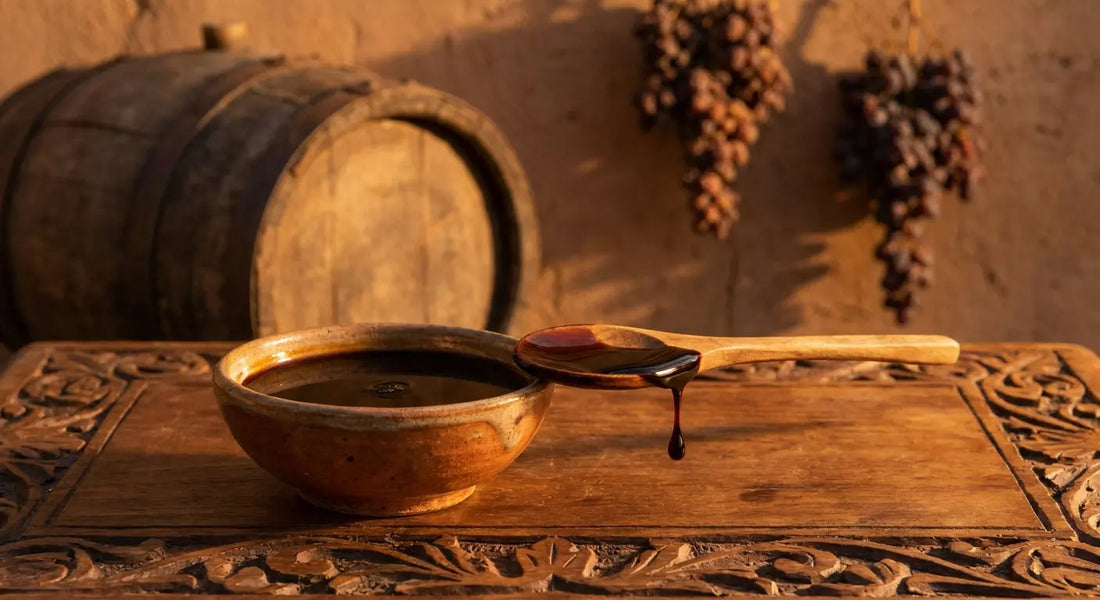
The aging happens in what's called a batteria, a series of five to ten wooden casks arranged in decreasing size. Each barrel is crafted from a different wood: oak, cherry, chestnut, mulberry, juniper. Every year, the vinegar is transferred from a larger cask to a smaller one, concentrating its flavor naturally through slow evaporation. Decades of this process create a depth of flavor that no factory can replicate in an afternoon.
For the most exceptional bottles, there's the Extravecchio designation, which requires a minimum of 25 years of aging. Each bottle is individually numbered and sealed with a golden consortium capsule, certifying its authenticity.
The European PDO (Protected Designation of Origin) system governs every step. All grapes must be harvested in Modena. The entire production process must take place in Modena. This is a legally protected, geographically anchored product with centuries of tradition behind it.
In Modenese families, it's common to start a set of barrels when a child is born and gift the aged vinegar at their wedding. This is a product shaped by generations, not a production line.
Don't confuse this with Balsamic Vinegar of Modena IGP. That's a lesser geographic protection that permits additives, including caramel coloring and thickeners. Consumers regularly confuse IGP with DOP, and that confusion is exactly what glaze brands exploit. The global balsamic vinegar market reached nearly $2.3 billion USD in 2025, and exports of Balsamic Vinegar of Modena alone approached nearly $1 billion USD in consumer value that year. A lot of that money goes to products that aren't what consumers think they are.
Now Read the Label on Your Balsamic Glaze
Go ahead. Flip your store-bought glaze over and read the ingredient list.
Take a popular brand like Botticelli. Here's what you'll find: Cooked Grape Must, Balsamic Vinegar of Modena IGP (only 39%), Wine Vinegar, Caramel Coloring, Guar Gum, Xanthan Gum. Six ingredients, and three of them are industrial additives.
Now compare that to aged traditional balsamic vinegar's ingredient list: cooked grape must. One ingredient. Period.
What do those additives actually do? Guar gum and xanthan gum are industrial thickeners added to fake the viscosity that 12 years of natural evaporation creates organically. Caramel coloring mimics the deep mahogany hue that aging produces on its own. These are cosmetic tricks, nothing more.
Then there's the sugar problem. Commercial glazes often pile added sugars on top of already-concentrated grape sugars. Aged balsamic achieves its natural sweetness entirely through evaporation, not supplementation. For anyone watching their sugar intake, that's a critical distinction.
This matters because consumers are paying attention. Roughly 78% of consumers globally say they'll pay more for clean, natural products. About 39% actively prefer condiments with no artificial additives or preservatives. Clean-label claims led by "no additives or preservatives" hit 14% penetration across packaged foods in 2025, and clean-label sauce brands are commanding price premiums of up to 15% over conventional alternatives.
Aged traditional balsamic vinegar is the clean-label answer that glaze can never be. One ingredient, zero compromises.
What Heat Destroys That Time Builds
Balsamic glaze is made by cooking balsamic vinegar down rapidly with added sugar and thickeners. Heat is the shortcut that replaces patience, and that shortcut comes at a real cost.
Over 12 to 25 years of slow aging, traditional balsamic vinegar develops complex polyphenols and aromatic compounds. These are the molecules responsible for its layered, nuanced flavor. The rapid reduction process used to make glaze chemically degrades these compounds, stripping away the very complexity that makes aged balsamic special.
Research published in Food Chemistry in 2007 found that approximately 45% of traditional balsamic vinegar's antioxidant activity comes from its polyphenolic fraction, with tannins contributing roughly 50% of that activity. The aging process concentrates these polyphenols significantly. Glaze, by contrast, cooks most of them away.
The health implications are straightforward. Aged balsamic vinegar contains significantly higher polyphenol levels linked to antioxidant, anti-inflammatory, and cardiovascular health benefits. A tablespoon of balsamic vinegar contains just 14 calories and zero fat. Commercial glazes with added sugars push that number considerably higher.
One in four consumers worldwide say they're eliminating processed foods from their diets. Aged balsamic vinegar is minimally processed, single-ingredient, and health-forward. Glaze is the opposite: a processed, multi-additive product engineered to look and taste like something it isn't.
Aged Balsamic Does More in Your Kitchen
Balsamic glaze is a one-trick condiment. You drizzle it on a plate as a garnish, and that's about it.
Aged traditional balsamic vinegar is a completely different tool. Use it in salad dressings. Build marinades around it. Deglaze a hot pan with a few drops and watch it transform a simple sauce. Roast vegetables with it. Pair it with aged Parmigiano-Reggiano or Pecorino. Drizzle it over fresh strawberries or vanilla gelato. Finish a perfectly grilled steak with just a touch.
The cost-per-use argument changes the math: aged balsamic is used in drops, not tablespoons. Its higher upfront price is deceptive because a single bottle lasts far longer and serves far more culinary purposes than any glaze ever could.
If you're curious about exploring artisan condiments, our curated gift sets and sample packs at Tubac Gourmet Foods are built for exactly that kind of flavor discovery.
For those of us cooking in the Sonoran Desert tradition, aged balsamic's layered depth pairs beautifully with the bold, smoky, sun-drenched ingredients that define our regional table. Think grilled meats rubbed with chile, roasted peppers, charred corn. These are flavors that demand a condiment with real complexity, not a sugary drizzle.
Stop Settling for the Shortcut
Balsamic glaze is a factory compromise. Aged traditional balsamic vinegar is a centuries-old Italian masterpiece that took longer to make than most kitchen appliances have been in production. One ingredient, twelve to twenty-five years, zero shortcuts. That's what you taste in every single drop.
When you shop for balsamic, look for PDO or DOP certification on the label. Read the ingredients with the same scrutiny you'd apply to any artisan food product. If the list is longer than one item, it's not the real thing.
At Tubac Gourmet Foods, every small-batch jar we make in Tubac, Arizona reflects the same commitment: handcrafted, no artificial preservatives, no fillers, just honest ingredients and bold flavor. That's the standard we hold ourselves to, and it's the same reason we believe aged traditional balsamic vinegar belongs in your kitchen.
Ready to taste what bold, honest flavor really means? Explore our full collection of artisan condiments and find your next kitchen essential.