


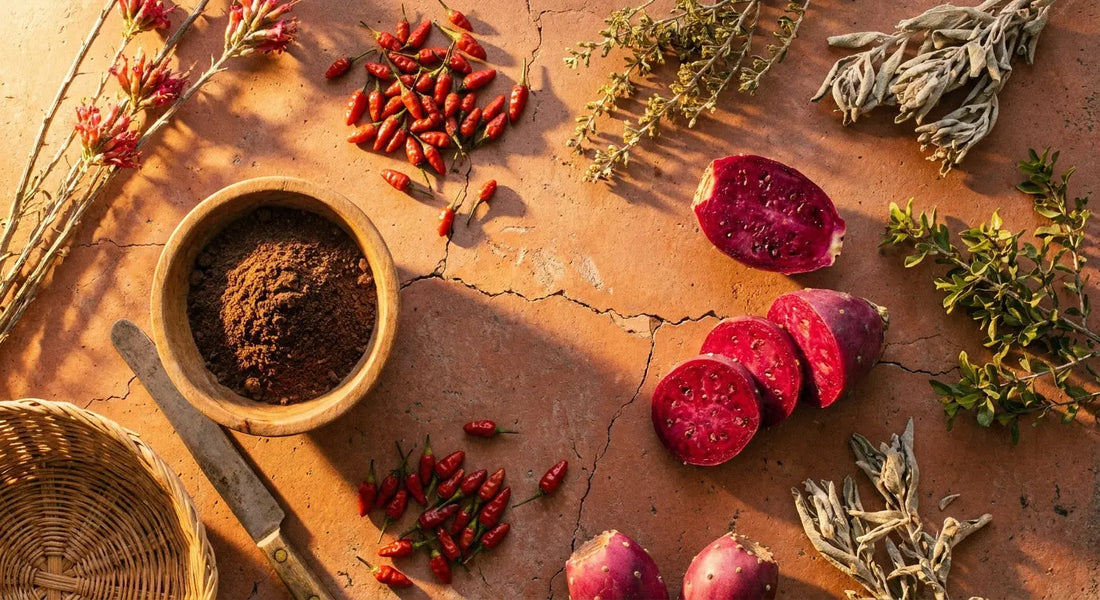
The Desert Pantry Most Home Cooks Have Never Tasted
Most of what passes for "Southwest cooking" barely scratches the surface of a pantry that stretches back more than 4,000 years. The Tucson region holds the longest record of continuous agricultural cultivation in what is now the United States: over 4,100 years of growing, harvesting, and cooking from the desert floor.
That history earned Tucson a distinction no other American city had claimed before: in 2015, it became the first U.S. city designated a UNESCO Creative City of Gastronomy, one of only 50 such cities worldwide and one of just two in the entire country. The 10th anniversary of that recognition, celebrated in 2025, put a well-deserved spotlight on a cuisine that is not Tex-Mex, not California-style, and not generic Mexican food. Sonoran cuisine is its own layered tradition, shaped by Indigenous, Spanish mission-era, Mexican ranching, and cowboy foodways.
The Sonoran Desert is the most biodiverse desert in North America, and from that richness comes a pantry of ingredients with stories, flavors, and uses that most home cooks have never encountered. Here are eight of the most essential.
1. Chiltepin Pepper — The Mother of All Peppers
The chiltepin is the only wild chile native to the United States. Often called "the mother of all peppers," it has been cultivated for more than 8,000 years across Mexico, Peru, the Caribbean, and the American Southwest. It is, in every sense, where chile culture begins.
Don't let its tiny, pea-sized shape fool you. The chiltepin registers between 50,000 and 100,000 Scoville heat units, roughly 20 times hotter than a jalapeño. Its heat is different, though: bright, sharp, and fleeting, a quick burst that fades fast and leaves a warm, earthy glow behind.
In Sonoran kitchens, chiltepins are crumbled into soups, stews, and salsas, or crushed as a finishing spice over eggs, beans, and grilled meats. Chiltepin hot sauces are a natural artisan expression of this ingredient, and small-batch Sonoran-style condiments carry that tradition forward. If you want to grow your own, Native Seeds/SEARCH in Tucson sells seeds and dried chiltepins from their heritage seed bank.
2. Mesquite — The Desert's Smoke and Flour
Mesquite plays a double role in Sonoran cooking. As a grilling wood, it's the backbone of carne asada culture across the region, producing a smoke that's deeper and more complex than generic charcoal. Grilling over mesquite is a hallmark of Sonoran backyards and restaurants alike, giving meats, fish, and vegetables a flavor that is unmistakably of this place.
Ground into flour, mesquite pods become something else entirely: a naturally sweet, nutty powder with a low glycemic index and high fiber content. That nutritional profile fits squarely into the better-for-you food movement gaining momentum in 2026. Tucson's craft beer scene has even embraced it, with mesquite-smoked stouts appearing on local tap lists.
Try mesquite flour in pancakes, stir it into a rub for grilled chicken, or look for mesquite-smoked honey to drizzle over roasted squash.
3. Prickly Pear — The Desert's Most Versatile Fruit
Prickly pear gives you two ingredients in one plant. The fruit, called tuna, is jewel-toned and sweet, perfect for syrups, glazes, and salsas. The pads, known as nopalitos, are a savory vegetable with a slightly tart, green-bean-like flavor that works beautifully grilled, pickled, or sautéed.
Nopalitos rank among the best slow-release foods for blood sugar management, rich in soluble fiber thanks to their desert-adapted biology. The University of Arizona, with USDA funding, has researched prickly pear as a climate-smart crop with real nutritional punch. The market agrees: the global prickly pear metabolic health ingredients market hit $52.4 million in 2025 and is projected to reach $58 million in 2026, growing at a 10.6% annual rate.
Hundreds of tons of nopales are imported monthly from Mexico to meet U.S. demand. On the craft beverage side, prickly pear sours and prickly pear margaritas have become fixtures of the Arizona bar scene. A prickly pear glaze over grilled pork is one of the simplest ways to bring this ingredient home.
4. Saguaro Fruit — A Taste You Can't Find Anywhere Else
The giant saguaro cactus grows in one place on Earth: the Sonoran Desert. That makes its fruit a true terroir ingredient, impossible to replicate anywhere else. Intensely sweet with a fig-like richness, it has been used for centuries to make syrups, jams, and tiswin, a ceremonial beverage central to Tohono O'odham tradition.
Saguaro fruit is experiencing a contemporary renaissance, showing up on restaurant menus and in craft beverages across Arizona, including saguaro blossom honey wheat beers brewed with local ingredients. The San Xavier Co-op Farm, operated by the Tohono O'odham Nation on 860 acres just 10 miles south of downtown Tucson, serves as both a source and a cultural steward of saguaro harvesting traditions.
This is desert terroir at its most specific: a flavor rooted in a single landscape, carried forward by the people who have lived there longest.
5. Tepary Beans — The O'odham Staple Built for the Desert
Tepary beans are an ancient O'odham staple and one of the most drought-tolerant crops in North America. They thrive in extreme desert heat where other beans would fail, producing a harvest that is nuttier, denser, and more complex than any common bean you've tasted. Slow-cooked, they turn creamy and rich.
Nutritionally, tepary beans are packed with soluble fiber and rank among the best slow-release foods for blood sugar management. They're a cornerstone of the Indigenous food sovereignty movement, with the San Xavier Co-op Farm growing and selling them as part of a broader effort to restore Tohono O'odham foodways.
Slow-cook tepary beans with crushed chiltepin and Mexican oregano for a deeply Sonoran side dish. Puree them into a dip, or fold them into a hearty desert stew. Once you've cooked with them, regular pinto beans will feel one-dimensional.
6. White Sonoran Wheat — The Soul of the Flour Tortilla
If you've ever wondered why Sonoran flour tortillas are paper-thin, pliable, and slightly sweet, the answer is White Sonoran wheat. Introduced by Spanish missionaries over 400 years ago, this heritage grain became the defining crop behind Sonora's iconic tortillas, setting the region apart from the corn-tortilla-dominant cuisines found elsewhere in Mexico.
White Sonoran wheat nearly disappeared. Its revival owes a great deal to bakers like Don Guerra, the James Beard Award-winning founder of Barrio Bread in Tucson, whose loaves are stamped with a saguaro cactus as a symbol of desert terroir. His work has brought national attention to a grain with a flavor profile unlike modern commodity wheat: softer, slightly sweet, with a delicate crumb.
For adventurous home bakers, White Sonoran wheat opens up heritage flour tortillas, rustic breads, and pastries with a genuine sense of place. This is American desert terroir, 400 years in the making.
7. Agave — Sweetener, Spirit, and Ancient Food
Agave's role in Sonoran cooking goes far beyond the syrup bottle. Roasted agave hearts, called piñas, have been a food source in the Sonoran Desert for millennia, long before anyone thought to distill them into spirits. That roasted sweetness, caramelized and earthy, is one of the oldest flavors in this pantry.
Tucson and Phoenix are home to a growing agave spirits scene distinct from mainstream tequila culture, rooted in desert tradition and small-batch craft. In the kitchen, agave nectar works beautifully as a sweetener in marinades, glazes, and dressings, especially when you want a clean, rounded sweetness without refined sugar.
The trending "swavory" flavor profile, where sweet and savory collide, finds a natural home here. Agave's sweetness paired with chiltepin heat and smoky mesquite creates the kind of layered, complex flavor that keeps you reaching for another bite.
8. Mexican Oregano — The Herb That Changes Everything
Here's something most cooks don't realize: Mexican oregano (Lippia graveolens) is a completely different plant from the Mediterranean oregano sitting in your spice rack. It's more citrusy, more floral, and more intensely aromatic. Swap one for the other in a Sonoran recipe and you'll taste the difference immediately.
Mexican oregano is a non-negotiable pantry staple for regional cooks and chefs, cited alongside chiltepin and masa flour as essential to authentic Sonoran flavor. It brightens the earthiness of tepary beans, lifts the heat of chiltepin, and adds a fragrant complexity to mesquite-grilled meats and slow-simmered stews.
Look for dried Mexican oregano at Latin markets, specialty food stores, or online retailers. Quality varies enormously from generic dried oregano, so seek out a source you trust. Once you start cooking with it, you'll understand why Sonoran cooks consider it irreplaceable.
Building Your Sonoran Pantry: Where to Start
Sourcing these ingredients is easier than you might think. Native Seeds/SEARCH in Tucson carries heritage seeds and dried ingredients. The San Xavier Co-op Farm sells tepary beans and saguaro products directly. Latin grocery stores stock nopalitos and Mexican oregano. For artisan Sonoran condiments, specialty food retailers and online shops are your best bet.
If sourcing raw ingredients feels like a big first step, artisan small-batch condiments are the fastest way to bring authentic Sonoran flavors into your everyday cooking. Chiltepin hot sauces, prickly pear glazes, mesquite-smoked honey: these ready-to-use products let you explore the pantry without hunting down every individual ingredient. Our handcrafted Southwest-inspired salsas and condiments at Tubac Gourmet Foods are made for exactly this kind of exploration, small-batch, all-natural, and rooted in the flavors of this desert.
Building a Sonoran pantry is an act of engaging with one of the world's 50 UNESCO Cities of Gastronomy and a culinary tradition that spans more than four millennia. You don't need all eight ingredients at once. Start with three: chiltepin, Mexican oregano, and prickly pear. That trio alone will transform the way you cook.
The Sonoran Desert pantry is not a trend. It is an ancient, living culinary tradition that is finally getting the recognition it deserves.
The Desert Has Always Known How to Feed People
For over 4,000 years, the Sonoran Desert has been feeding people. These eight ingredients are the reason. This is not generic Southwest or Tex-Mex; it is a specific, place-driven culinary heritage with UNESCO recognition and deep Indigenous roots.
With growing national chef interest and a decade of UNESCO recognition behind it, Sonoran cuisine is having its long-overdue moment. Taste the desert. Crumble chiltepin over your morning eggs. Grill over mesquite this weekend. Drizzle prickly pear glaze over something unexpected. This is a pantry unlike any other in America, and it has been waiting for you.