


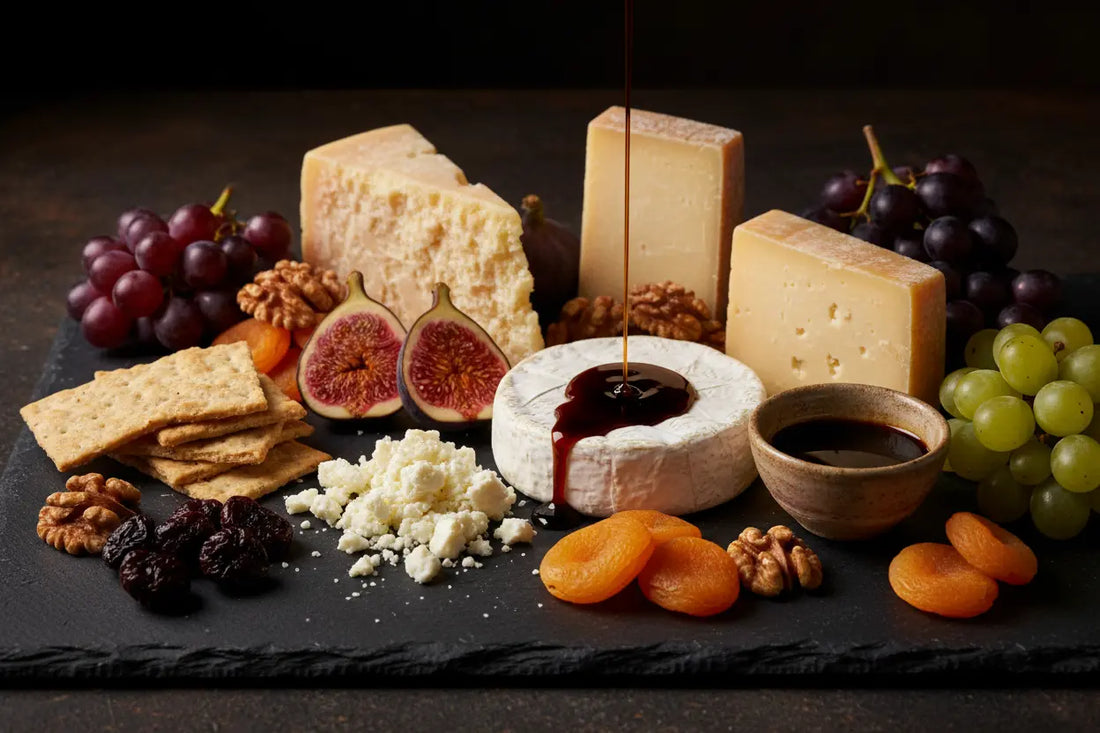
A good cheese board can feel flat until something brings the flavors into focus. Balsamic vinegar does that elegantly: its acidity, sweetness, and glossy texture sharpen the bite of cheese without overwhelming it. For richer cheeses, aged balsamic vinegar is usually the best match because it adds depth instead of harshness. The trick is choosing the right cheese, the right amount of vinegar, and the right supporting ingredients so each bite tastes deliberate rather than busy.
Why cheese and balsamic work so well
Cheese and balsamic work because the pairing balances contrast and comfort in the same bite. The vinegar brings acidity and sweetness, while cheese contributes fat, salt, and creaminess. That balance of acidity and richness makes even a simple tasting plate feel polished. Aged balsamic vinegar is especially effective with fuller cheeses because its mellow tartness and concentrated sweetness can stand up to more savory flavors. Expect differences in texture as much as flavor: a crumbly wedge, a silky spoonable cheese, or a dense aged cheese will each change how the vinegar lands on the palate. Keep portions modest, though. A few drops can be enough to create a clean finish without turning the plate sticky or one-note.
What to know about aged balsamic vinegar
Not all balsamic is built for the same job. Traditional aged balsamic vinegar is thicker, darker, and more layered than younger, lighter versions, which makes it the better choice for cheese boards and finishing dishes. The best pairings usually come from bottles that have enough body to coat the cheese, but not so much sweetness that the bite feels syrupy. Younger balsamic can still work with fresher cheeses, yet delicate flavors need restraint while hard cheeses can handle more intensity. If the vinegar tastes sharp, thin, or overly acidic, use it sparingly and pair it with creamier cheese or bread so the bite stays balanced.
Aged between 12 and 25 years
When balsamic has been aged between 12 and 25 years, the flavor typically deepens into richer sweetness, notes of fig, and a rounder finish. That concentration is exactly why it should be used in small amounts; a few drops per serving often deliver more impact than a full drizzle. This style is best treated as a finishing condiment rather than a cooking ingredient, especially when the goal is to preserve its aromatics and glossy texture. If the cheese is subtle, such as ricotta or fresh goat cheese, the vinegar should stay minimal. With hard cheeses, the deeper sweetness can be a feature, not a distraction.
Best cheese styles to pair with balsamic
The easiest way to choose is by texture and intensity. Hard, aged cheeses usually make the strongest match because they can handle the vinegar’s sweetness and acidity. Soft cheeses need more care, but they can be excellent when balanced with fruit or bread. A useful rule is to start with cheeses that have salt, nuttiness, or tang, then move toward milder options if the balsamic is especially rich. Serve every cheese at room temperature so the aroma opens up and the texture feels more generous on the tongue. That small step makes the difference between a flat board and one that actually tastes layered.
| Cheese style | Best with balsamic? | Why it works |
|---|---|---|
| Hard cheeses | Excellent | Salty, nutty flavors and firm texture hold up to bold vinegar |
| Blue cheese | Very good | Pungency and creaminess match intense aged balsamic |
| Goat cheese | Very good | Tangy freshness balances sweetness |
| Ricotta and other soft cheeses | Good with restraint | Need small amounts and supporting ingredients |
Hard cheeses
Hard cheeses are the easiest starting point because their nutty, salty profiles can stand up to balsamic without fading. Their crystalline texture also helps the vinegar cling to each bite, so the flavor arrives in a clean wave instead of disappearing instantly. Think of a firm shard with a drop of syrupy balsamic: the first taste is savory, the middle is sweet and tart, and the finish stays long and satisfying. That contrast is what makes this combination feel so complete. If a cheese already tastes aged and concentrated, the vinegar should be treated like seasoning rather than sauce.
Soft cheeses
Soft cheeses bring a different kind of appeal. Their creaminess softens balsamic’s sharper edges, which can make the pairing feel more luxurious and approachable. The catch is that soft cheese can disappear quickly if the vinegar is too heavy, so smaller portions matter. A spoonful of ricotta or a modest slice of fresh goat cheese can be transformed with just a few drops. Fruit or bread helps anchor the bite and keeps the sweetness from taking over. This is a good route for casual entertaining because it feels elegant without requiring complicated prep.
Parmigiano Reggiano with aged balsamic
Parmigiano Reggiano remains the benchmark cheese and balsamic pairing for a reason. Its nutty, savory flavor and granular texture create the perfect surface for aged balsamic to settle into, and the cheese’s umami finish becomes brighter once the vinegar adds sweetness and lift. The pairing is satisfying without being heavy, which is why it shows up on restaurant boards and home platters alike. Parmigiano Reggiano also has enough complexity to make the vinegar taste more layered, revealing notes of fig, caramel, and woodiness in the background. If only one pairing is tried first, this is the one most likely to deliver an immediate “yes.”
Serving ideas for Parmigiano Reggiano
Uneven shards work better than thin slices because they catch the vinegar on the rough edges. Start with just a few drops, taste, and only add more if needed. The cheese should still taste like cheese first; the balsamic should deepen the experience, not cover it. For a simple board, add toasted nuts, ripe pears, or crusty bread so the plate has crunch and freshness alongside the richness. A small spoon of extra virgin olive oil can also make the cheese taste smoother and help the balsamic glide more evenly across the bite.
Pecorino Romano and Grana Padano pairings
Pecorino Romano and Grana Padano sit close to the same family of hard cheeses, but they give very different results. Pecorino Romano is saltier and sharper, so it works well with balsamic that has more richness and sweetness. Grana Padano is milder and a little more approachable, which makes it useful when the vinegar is especially dense or the eater prefers a gentler bite. Both benefit from balsamic’s mellow tartness because it rounds out the salt and brings the finish forward. In practice, Pecorino is the bold pick, while Grana Padano is the easy crowd-pleaser.
How to choose between them
Choose Pecorino Romano if stronger, sharper flavors are the goal. It can handle a more assertive aged balsamic without losing its identity. Choose Grana Padano when the table includes guests who like a softer, nuttier profile. Shaved pieces work well for a light appetizer, while chunked servings feel more rustic. Grated over a warm dish, either cheese can also take a final touch of balsamic at the table, though that style works best when the vinegar is used sparingly and added after plating.
Blue cheese with balsamic: bold and balanced
Blue cheese is one of the most interesting cheese and balsamic pairings because it already has the intensity to meet a strong vinegar head-on. Its pungency, salt, tang, and creaminess create a big flavor profile, and aged balsamic adds sweetness that keeps the bite from feeling harsh. The result is bold but controlled rather than aggressive. This is a pairing for readers who enjoy more dramatic flavors and don’t mind a little funk on the plate. The key is moderation: the vinegar should brighten the cheese, not flatten it.
Best blue cheese serving ideas
Pair blue cheese with pear slices, walnuts, or crusty bread to soften the edges and create contrast. A small drizzle of the most aged balsamic works best because it can keep up with the cheese’s strength. More delicate blue cheeses may prefer less vinegar, while stronger styles can take a deeper, stickier pour. The sweetness can make the salt taste cleaner and the creaminess feel more rounded. If the cheese is very sharp, add one more sweet element such as ripe pears to keep the bite balanced.
Goat cheese, ricotta, and other soft cheeses
Fresh cheeses need a lighter hand, but they can be some of the most enjoyable pairings on the board. Goat cheese brings a bright tang that works beautifully against balsamic’s sweetness, while ricotta offers a mild creamy base that lets the vinegar stand out. Because these cheeses are more delicate, smaller portions are usually best. Use balsamic as a finishing touch, not a soak. That keeps the dish feeling fresh and prevents the cheese from becoming watery or overly sweet. For easy entertaining, these combinations can be served on toast, with fruit, or in small bowls for guests to build their own bites.
Goat cheese and ricotta pairings
Goat cheese has enough acidity of its own to echo the vinegar, which creates a bright, lively flavor. Ricotta is softer and milder, so it benefits from a little more texture around it. For both, balsamic should stay on top as a garnish, not a marinade. Try a swipe of ricotta with a few drops of balsamic, then finish with herbs or toasted nuts. Goat cheese pairs nicely with cracked pepper, honey, or sliced fruit. Either cheese can work well when the overall bite stays light and the other ingredients help the flavors hold together.
Other ingredients that improve the pairing
The best cheese boards rarely rely on cheese alone. Supporting ingredients give the palate something to move between and help the balsamic feel intentional instead of repetitive. Fruit, nuts, bread, and cured meats are the most useful add-ons because they add sweetness, crunch, salt, or fat. That mix gives the board more range and makes it easier for guests to find a pairing they like. If a vinegar leans especially rich, use ingredients that lighten it; if the cheese is mild, use ingredients that add definition. A small number of thoughtful extras is usually better than overcrowding the platter.
Extra virgin olive oil, fruit, and bread
High-quality extra virgin olive oil can soften acidity and add a rounder mouthfeel, especially with fresh cheeses. Fruit brings natural sweetness that echoes aged balsamic without competing with it. Ripe pears, figs, and berries all work well because they add brightness and a clean finish. Bread matters too: grilled bread or crostini gives the board texture and a practical way to hold cheese, vinegar, and any other ingredients in one bite. If the board includes a softer cheese, these extras help keep the experience from feeling too rich or too soft.
How to build a cheese and balsamic board
A smart board has a clear rhythm: mild, creamy, salty, and bold, with enough texture to keep every bite interesting. Start by choosing two or three cheeses with different intensities, then add one or two supporting ingredients for each. Arrange the cheeses by strength so guests naturally move from lighter flavors to the more aged options. This keeps the tasting experience from being jumbled and helps the balsamic show up at the right moment. A few accents are enough; overloading the board can make the vinegar feel lost. Think of the board as a sequence of bites rather than a pile of ingredients.
Portioning, plating, and order of tasting
Begin with milder cheeses and work toward stronger, aged options so the palate stays clear. Use small pours or drizzles so guests can control how much balsamic lands on each bite. One cheese at a time is the simplest way to taste the differences before mixing combinations. Once the classic pairings are understood, start combining them with fruit, nuts, and bread for a more layered board. The best plates often feel almost effortless because each item has a job.
What to pair with aged balsamic vinegar?
For a quick answer, the most reliable partners for aged balsamic vinegar are Parmigiano Reggiano, Pecorino Romano, Grana Padano, blue cheese, goat cheese, and ricotta. Add pears, figs, walnuts, and crusty bread to complete the board. Those combinations work because aged balsamic brings rich sweetness and acidity that complements bold, creamy, or salty foods without needing much else. If the goal is a simple appetizer, start with one hard cheese and one soft cheese, then add fruit for contrast. That gives a balanced plate that works for casual snacking or entertaining.
Quick answer and top combinations
The quickest path is this: Parmigiano Reggiano with a few drops of aged balsamic, goat cheese with pear, blue cheese with walnuts, or ricotta with figs. Pecorino Romano and Grana Padano are excellent when a harder, saltier cheese is preferred. These pairings also fit well on appetizer boards, alongside crusty bread and a small bowl of olive oil. If there is only one bottle in the kitchen, aged balsamic is the one that can move from cheese boards to simple snacks without much effort.
Serving tips, mistakes to avoid, and final pairing notes
Less balsamic usually tastes better than more, especially with aged styles. Overpouring can make even a good cheese taste one-dimensional. Avoid heating aged balsamic when delicate flavor matters, because warmth can flatten the complexity that makes it special. Serve cheese at room temperature, finish at the table so the vinegar stays vivid and glossy, and begin with one classic pairing before trying more creative combinations. Once the balance is right, cheese and balsamic become one of the easiest ways to make a small plate feel thoughtful.
Best practices for better results
Start with a classic like Parmigiano Reggiano, then branch out to goat cheese, blue cheese, or ricotta. Keep the pours small, taste often, and adjust by texture rather than by habit. That approach makes it easier to find the right balance of acidity and richness for each cheese. A little restraint goes a long way, and the best pairings usually leave room for the next bite.
FAQ: Cheese and Balsamic Pairings: Best Matches
Q: Why does balsamic vinegar pair so well with cheese? A: Balsamic vinegar's sweet-tart acidity cuts through the richness and fat of cheese, cleansing the palate between bites while its concentrated sweetness amplifies the savory, umami depth of aged and creamy varieties. It's one of the most classic pairings in Italian and artisan food culture.
Q: What cheese pairs best with aged dark balsamic? A: Aged Parmigiano-Reggiano or Pecorino Romano are the gold standard — a few drops of Tubac's Fig Dark Balsamic Vinegar over a wedge of aged Parm is a revelation. The fig notes in the balsamic echo the nutty, crystalline sweetness of the cheese perfectly.
Q: What's the best cheese to pair with Fig Dark Balsamic Vinegar? A: Creamy brie, fresh burrata, or mild goat cheese are exceptional matches. The jammy fig sweetness of Tubac's Fig Dark Balsamic drizzled over a wheel of warm brie with walnuts and honey is a showstopping appetizer that takes under 5 minutes to prepare.
Q: Which cheese works with a honey balsamic vinegar? A: Sharp white cheddar, manchego, or aged gouda pair beautifully with Tubac's honey-infused vinegars. The caramel and floral notes in the honey balsamic complement the butterscotch depth of aged gouda especially well — a perfect charcuterie board combination.
Q: Can I pair balsamic with blue cheese? A: Yes — a bold, sweet aged balsamic is one of the few condiments that can stand up to the intensity of Gorgonzola or Roquefort. The sweetness tames the sharpness of the blue while the acidity keeps the richness in check. Drizzle sparingly and serve with toasted walnuts and sliced pears.
Q: What's a simple balsamic cheese board I can build with Tubac products? A: Start with three cheeses — a creamy brie, a sharp aged cheddar, and a tangy goat cheese. Add Tubac's Fig Dark Balsamic Vinegar for drizzling, Garlic Arizona Desert Honey for the savory-sweet element, and a Chipotle Salsa for a bold Southwest accent. Fill in with artisan crackers, dried figs, fresh grapes, and toasted almonds.
Q: Does fresh mozzarella work with balsamic? A: It's a classic — the Caprese salad is built on this pairing. Drizzle Tubac's aged balsamic over fresh mozzarella with ripe tomatoes, fresh basil, and a finishing olive oil for an elegant, effortless appetizer that showcases the vinegar's complexity.
Q: How much balsamic should I use when pairing with cheese? A: Less is more — a few drops to a teaspoon is all you need. Premium aged balsamic is intensely concentrated, and over-drizzling will overwhelm the cheese. Think of it as a finishing accent, not a sauce.
Q: Can I cook with balsamic and cheese together? A: Absolutely — a balsamic reduction drizzled over a baked brie en croûte, or stirred into a creamy gorgonzola pasta sauce, adds incredible depth. Tubac's Fig Dark Balsamic also makes a stunning glaze for a grilled halloumi or goat cheese crostini.
Q: Where can I find Tubac Gourmet Foods balsamic vinegars for my cheese board? A: The full collection of small-batch artisan balsamic vinegars — including Fig Dark Balsamic and honey-infused finishing vinegars — is available at tubacgourmetfoods.com, hand-crafted in Tubac, Arizona.