


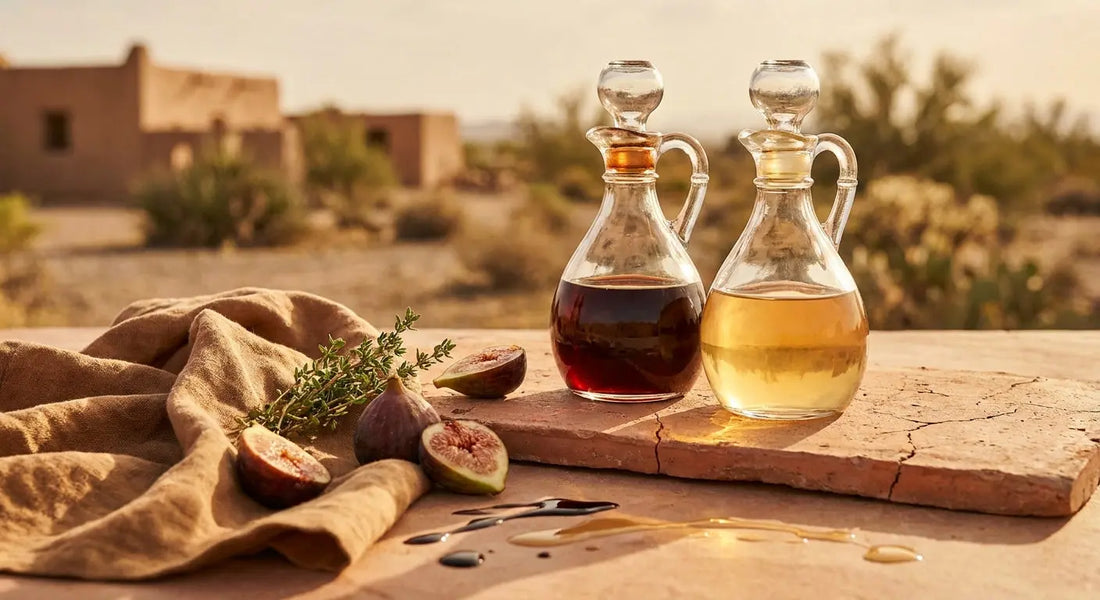
Two Balsamics, One Big Difference
You've probably drizzled balsamic vinegar over a salad or a slab of fresh mozzarella without thinking twice. But most home cooks don't realize there are two fundamentally different types, and reaching for the wrong one can muddy a dish's color, overwhelm delicate flavors, or miss the mark entirely.
The rule of thumb is simple. Dark balsamic is bold and dramatic. White balsamic is bright and nearly invisible. Once you understand that distinction, you'll never second-guess which bottle to grab.
Think of this as your practical decision guide — not a history lecture, but a real tool for building better dishes, from the grill to the dessert plate.
How Dark Balsamic Vinegar Is Made
Dark balsamic starts with grape must, the freshly pressed juice of whole grapes, skins, seeds, and stems included. That must is cooked at high temperatures, causing the natural sugars to caramelize. This is where its deep mahogany color and rich sweetness are born.
The real magic happens during aging. Traditional dark balsamic spends a minimum of 12 years in a batteria, a series of progressively smaller wooden barrels. Each barrel is made from a different wood: oak, chestnut, cherry, or mulberry. Every wood imparts distinct flavor notes, from toasted wood and dried plum to fig and dark molasses.
If a bottle carries a PDO (or DOP) certification, it was made entirely in Modena or Reggio Emilia from 100% cooked grape must. Extra-aged varieties, those with 25 or more years of barrel time, are bottled in a distinctive 100ml bulb-shaped glass. These bottles represent the absolute pinnacle of the craft.
Then there's PGI (IGP) balsamic vinegar of Modena, a more accessible tier. PGI requires only 60 days of aging and allows producers to blend grape must with wine vinegar. It's still a quality product, but the depth and complexity differ significantly from a PDO bottle that's been developing for decades.
One recent change worth knowing: updated EU regulations now require producer names on balsamic vinegar labels, a transparency win that helps you know exactly who made what's in your bottle. With global production of Balsamic Vinegar of Modena reaching nearly 100 million liters annually, that kind of clarity matters.
How White Balsamic Vinegar Is Made
White balsamic takes a different path from the very first step. The grape must is cooked at lower temperatures under pressure, which prevents caramelization. That single production difference explains its pale golden color and lighter personality.
Made primarily in Emilia-Romagna from white Trebbiano grapes (sometimes blended with Albana and Montuni varieties), white balsamic can be aged up to 12 years. Rather than charred, seasoned barrels, it rests in new, unfired wood barrels or stainless-steel containers designed to preserve that light hue.
The texture is noticeably different, too. Where dark balsamic pours thick and syrupy, white balsamic is thinner and more fluid, closer to a traditional vinegar in body.
Here's a practical tip most brands won't share: white balsamic is subject to natural oxidation. Over time, it can darken from gold to deep amber. If color matters for your presentation, plan to use it within three months of opening. The good news is that darkening affects only appearance, not flavor.
It's also worth noting that white balsamic currently leads all balsamic types in global search volume, with interest peaking during summer months. More cooks are discovering it, and for good reason.
Flavor, Color, and Texture: Side-by-Side
Dark balsamic is deep mahogany, thick enough to coat the back of a spoon, and layered with complex notes of dried plum, fig, molasses, and toasted wood. It's bold, assertive, and unapologetically rich. Its higher sugar concentration, a result of longer aging, makes it ideal for reductions and glazes that cling and caramelize.
White balsamic is light golden, thin and fluid, with a crisper, fruitier character. It's delicate and bright, the kind of ingredient that enhances without announcing itself.
The practical color rule is straightforward: dark balsamic will stain and tint your food. White balsamic is nearly invisible in a dish. If you're dressing a bright green salad or finishing a pale risotto, that difference matters.
The decision framework is equally simple: match the intensity and color of the balsamic to the intensity and color of the dish. Bold food, dark bottle. Delicate food, light bottle.
When to Use Dark Balsamic Vinegar
Dark balsamic is built for dishes that can stand up to its presence. Its syrupy body clings to proteins and caramelizes beautifully over high heat, making it ideal for marinades and glazes on grilled meats. If you haven't tried a dark balsamic glaze on a thick-cut pork chop or a rack of ribs, you're missing one of the best alternatives to traditional BBQ sauce. That trend has been picking up serious momentum among grill masters over the past couple of years.
Reductions are another natural fit. A slow-simmered dark balsamic reduction drizzled over a caprese salad, roasted root vegetables, or a hearty grain bowl adds a layer of complexity that's hard to replicate with any other ingredient.
It's equally at home in braised dishes, stews, and agrodolce-style sauces where you want bold, sweet-tart depth. Pair it with strong cheeses, cured meats, and dark berries for combinations that feel effortless but taste extraordinary.
Flavored dark balsamic vinegars, like fig or blackberry, extend the range even further. Here at Tubac Gourmet, our small-batch flavored balsamics are crafted to complement these exact applications. And if you're shopping for a gift, aged dark balsamic is the premium choice. Its complexity and rarity make it a standout pantry gift that serious cooks genuinely appreciate.
When to Use White Balsamic Vinegar
White balsamic shines where dark balsamic would overpower or stain. Delicate vinaigrettes, light-colored sauces, and any dish where you want acidity and sweetness without altering the visual presentation are all natural fits.
It has a natural affinity with seafood. Its brightness cuts through the richness of fatty fish like salmon and tuna, and it's gentle enough for more delicate options like sea bass, halibut, and scallops. A simple white balsamic and olive oil drizzle on seared scallops is one of those dishes that takes five minutes but tastes like you spent an hour.
For pale pasta dishes, risotto, and cream-based sauces, white balsamic adds complexity without turning everything brown. It's the invisible workhorse of a well-stocked pantry.
Here's a use that surprises people every time: desserts. Drizzle white balsamic over vanilla ice cream, fresh berries, pound cake, or a fruit tart. The sweet-tart contrast creates a conversation-starting moment at the table.
White balsamic also works beautifully in Southwest-inspired applications. Think light vinaigrettes for grilled corn salads, citrus-forward salsas, or a bright finish on avocado dishes. Pair it with honey, whole-grain mustard, or a touch of hot sauce for a sweet-heat vinaigrette that belongs on everything from fish tacos to summer greens.
And remember: if presentation matters, use your white balsamic within three months of opening to keep that golden color at its best.
Health Benefits Worth Knowing
Both dark and white balsamic contain polyphenols and acetic acid, compounds linked to blood sugar regulation and digestive health support. A 2024 study published in the Journal of Functional Foods found that consuming one to two tablespoons of balsamic vinegar before a high-carb meal reduced post-meal blood glucose spikes by up to 20%.
On the antioxidant front, a 2019 study in MDPI Antioxidants tested 23 different vinegars and found that Balsamic Vinegar of Modena scored the highest antioxidant value (FRAP 23.52 µmol Fe(II)/mL), nearly six times higher than apple cider vinegar.
None of this makes balsamic a medicine. But it does make it part of the growing better-for-you condiment movement, a compelling bonus reason to reach for it more often. With 59% of shoppers willing to pay more for premium sauces and condiments, quality clearly matters to the people who care about what they eat.
Which One Belongs in Your Pantry (Or Both)?
Here's the short version: dark balsamic for bold, hearty, and dramatic dishes; white balsamic for delicate, colorful, and bright ones. If you're serious about cooking, keeping both on hand isn't redundant. They serve genuinely different purposes.
Flavored balsamic vinegars (think fig, peach, berry) bridge the gap between the two and open up even more possibilities for adventurous cooks and thoughtful gift-givers. Our curated gift sets at Tubac Gourmet let you experience both dark and white varieties, handcrafted in small batches and hand-labeled right here in Tubac, Arizona.
Building a well-stocked artisan pantry is one of the quiet joys of cooking. Every bottle tells a story of place, patience, and craft. Yours might start with the warm Sonoran sun on a desert morning and end with a drizzle of something extraordinary over tonight's dinner.