


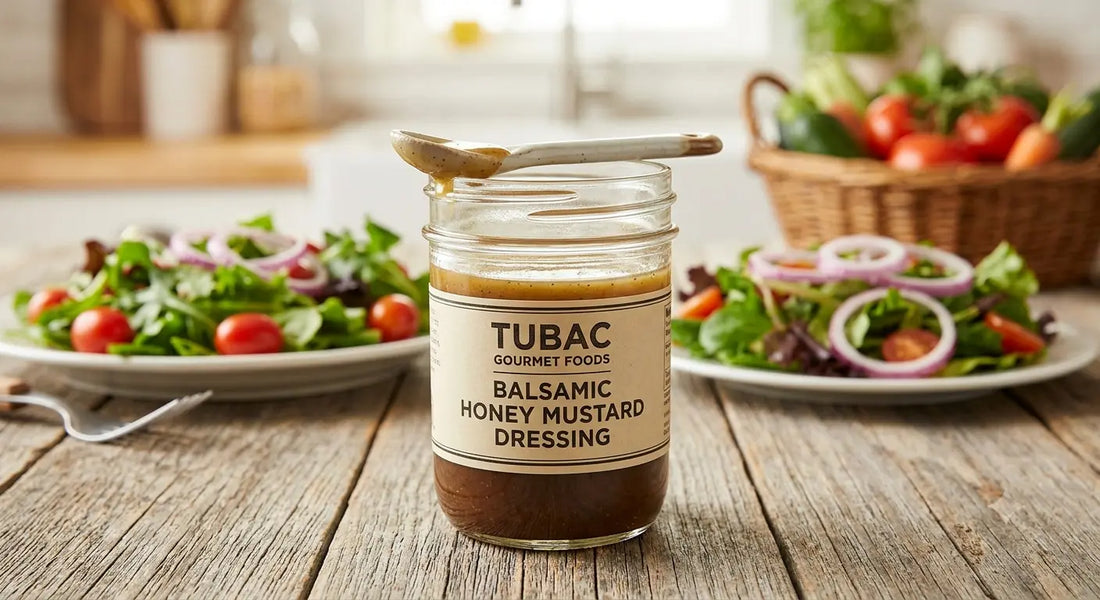
 A good honey balsamic dressing can turn a plain bowl of greens into the part of dinner people remember. This version is the easiest homemade salad dressing to keep on repeat: sweet, tangy, and ready in about five minutes. It also works beyond salad, pulling double duty as a quick drizzle for roasted vegetables or a simple marinade for chicken or tofu.
Honey Balsamic Dressing Recipe
This recipe keeps the flavor bright and balanced without any complicated steps. Balsamic vinegar brings deep acidity, honey smooths it out, and Dijon mustard gives the dressing enough body to cling to leaves instead of sliding off. Olive oil rounds everything out, creating a silky finish that tastes polished with very little effort. If you like sweet and tangy salad dressings that feel homemade rather than heavy, this is a strong everyday option.
Why This Dressing Works
The balance here is doing most of the work. Balsamic vinegar has natural sweetness, but it still needs honey to soften the sharp edge and make the flavor feel rounded. Dijon mustard acts as the emulsifier, helping the oil and vinegar stay mixed longer so the dressing looks smooth instead of broken. Olive oil softens the acidity and gives the mixture a creamy texture without dairy. And yes, balsamic vinegar and honey mustard go together very well; the combination is classic because each ingredient fills in what the other lacks.
Ingredients for Honey Balsamic Dressing
Start with 1/4 cup balsamic vinegar, 2 tablespoons honey, 1 tablespoon Dijon mustard, 1/2 cup extra-virgin olive oil, 1 small clove of garlic finely grated or minced, 1/4 teaspoon salt, and 1/8 teaspoon black pepper. That ratio gives you a balanced honey balsamic dressing that is tangy but not harsh. The balsamic vinegar supplies the base, honey adds sweetness and gloss, and Dijon mustard pulls the mixture together. Good olive oil matters here; a fruity, premium bottle tastes cleaner than a bland one. If balsamic is all you have, it should still be a quality one, since the flavor is front and center. In a pinch, maple syrup can replace honey, and wine vinegar can stand in for some of the balsamic if you want a sharper edge.
Simple Swaps and Add-Ins
A little garlic gives this dressing a savory backbone, while chopped herbs, lemon juice, or a pinch of red pepper can shift it in a different direction. If the dressing tastes too sweet, add a touch more vinegar. If it feels too sharp, another spoonful of honey usually fixes it fast.
How to Make Honey Balsamic Dressing
The jar method is the easiest place to start. Add the balsamic vinegar, honey, Dijon mustard, garlic, salt, and pepper to a mason jar, then pour in the olive oil. Seal it tightly and shake hard for 15 to 20 seconds until the mixture looks smooth and slightly thickened. If the honey is stubborn, whisk the vinegar, mustard, and honey together first, then slowly stream in the oil while whisking. A small blender or immersion blender also works well if you want a more stable emulsion. However you mix it, the key is fully combining the ingredients so the flavor is even from the first pour to the last. That is the basic answer to how to make balsamic and honey dressing at home, and it is the easiest route for most cooks.
Nutrition Facts and Health Notes
Per tablespoon, this dressing is usually moderate in calories and mostly driven by olive oil and honey. That makes it a healthy homemade salad dressing choice when you want better control over sugar, sodium, and ingredient quality than many bottled salad dressings offer. Exact nutrition facts will vary based on the brands used and how much dressing you actually serve, so consider this a practical estimate rather than a lab report.
Best Ways to Use Honey Balsamic Dressing
This dressing shines on simple green salads, especially ones with bitter greens, sliced apples, goat cheese, or toasted nuts. It also works well over grain bowls with quinoa, farro, or brown rice, where the sweet-tart flavor helps the whole bowl feel more complete. Roasted vegetables like Brussels sprouts, carrots, sweet potatoes, and cauliflower all benefit from a finishing drizzle. For protein, try it with grilled chicken, salmon, or chickpeas. It can even double as a light marinade or a dip for crusty bread and raw vegetables if you want a quick appetizer with minimal prep time.
Storage Tips for the Refrigerator
Store honey balsamic dressing in an airtight container or mason jar in the refrigerator. It will usually keep for about a week, sometimes longer if the ingredients are fresh and cleanly handled. Cold storage may thicken the olive oil and make the dressing separate a little, which is normal for homemade dressing. Just shake it before serving and it will come back together.
Common Questions About Honey Balsamic Dressing
When honey and balsamic vinegar are mixed, they create a sweet-tangy base that tastes brighter than either ingredient alone. A simple four-ingredient version is easy too: balsamic vinegar, honey, Dijon mustard, and olive oil. That shortcut is often enough for weeknight salads and is one of the easiest salad dressings to keep in rotation.
A Fast Homemade Dressing Worth Keeping on Hand
If you want one recipe that feels flexible, quick, and reliable, this balsamic honey mustard dressing fits the job. It is simple enough for busy weeknights, polished enough for guests, and easy to adjust based on what you like. Keep a bottle in the refrigerator, shake before using, and you will have a sweet and tangy dressing ready for salads, vegetables, and marinades whenever needed.