


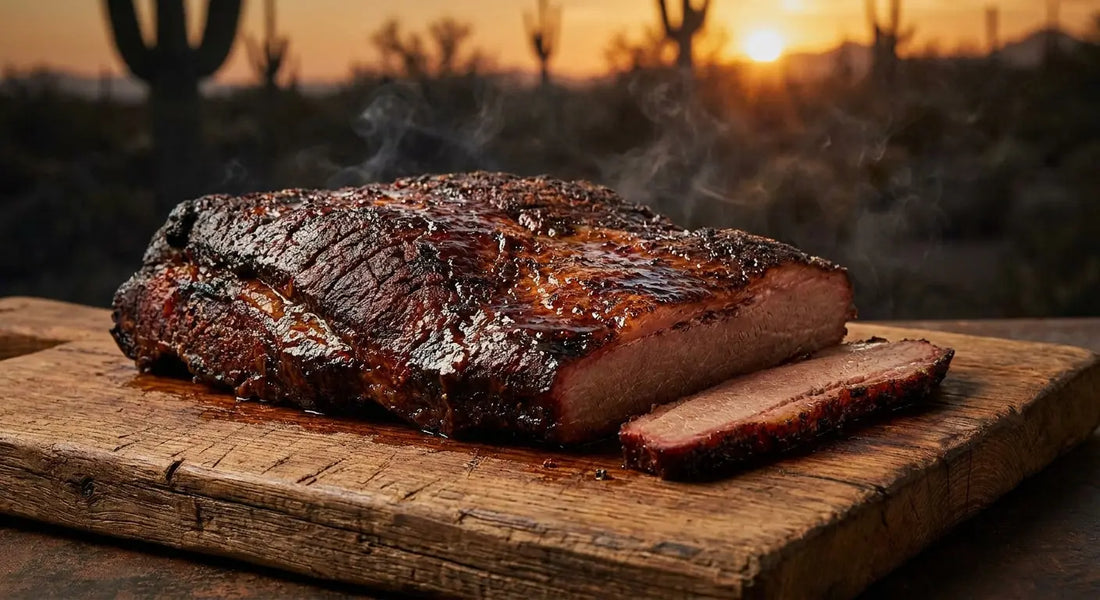
Why Your BBQ Bark Is a Chemistry Experiment
Here's a truth that trips up even experienced pitmasters: acid is not the enemy of BBQ bark. Mistimed acid is. The difference between a lacquered, shattering crust and a soft, pale disappointment comes down to three variables working in sequence: smoke, sugar, and acid.
The engine behind bark formation is the Maillard reaction, first described by French chemist Louis-Camille Maillard in 1912. It's the chemical cascade that turns raw protein and simple sugars into hundreds of new flavor compounds, building that dark, savory crust every pitmaster chases.
This article breaks down the science and gives you a practical layering technique you can use at your next cook. Artisan BBQ rubs and balsamic BBQ sauce aren't just flavor choices; they're chemical tools, and understanding how they work changes everything about the way you grill.
The Maillard Reaction: What Actually Builds BBQ Bark
The Maillard reaction is deceptively simple in concept: heat causes amino acids (from proteins) and reducing sugars to collide and rearrange, producing hundreds of new flavor compounds. These compounds are responsible for the browned crust, roasted aroma, and deep savory taste that define great barbecue.
You'll hear "bark" and "crust" used interchangeably, but bark refers specifically to the dark outer layer built by Maillard reactions, rendered fat, smoke residues, and the spice compounds in your rub. It's not just browning; it's a composite material formed over hours.
The optimal temperature range for Maillard browning sits between 302°F and 320°F, though browning can happen at lower temperatures given enough time. That's exactly what low-and-slow cooking does: it lets the reaction unfold gradually across the meat's surface.
But here's the detail most people miss: a wet surface cannot exceed 212°F, the boiling point of water. Browning only accelerates once the surface dries and climbs past that threshold. This is why patting your meat dry before applying an artisan BBQ rub matters so much.
pH plays a critical role too. Optimal Maillard browning occurs at pH 6 to 8, in slightly alkaline conditions. When the surface becomes more acidic, the amino groups in proteins get protonated and become less reactive, slowing the whole reaction. This is precisely why the timing of your balsamic glaze matters on a molecular level. Apply it too early, and you're chemically suppressing the very reaction you need to build a perfect BBQ crust.
How Smoke Contributes More Than Flavor
When wood burns in your smoker, it releases a complex cocktail of compounds. Lignin combustion produces phenols, which deliver that unmistakable smoky flavor and also act as antioxidants that help preserve the meat's surface. Aldehydes and organic acids from the burn contribute directly to Maillard chemistry happening on the bark.
Alcohols and esters add aromatic complexity, layering subtle fruity and floral notes into the crust. Hydrocarbons from incomplete combustion can introduce bitterness, which is why airflow management in your smoker isn't optional. Clean smoke means clean flavor.
Then there's the smoke ring, that coveted pink layer just beneath the bark. It forms when nitric oxide and carbon monoxide from wood combustion bind with myoglobin in the meat before it denatures at 160°F to 170°F. Low-and-slow cooking gives these gases enough time to penetrate and fix that pink hue. The smoke ring is a beautiful visual hallmark, though it's worth noting that it isn't a direct indicator of flavor or tenderness.
Here's where things get interesting for balsamic lovers: aged balsamic vinegar and wood smoke share overlapping chemistry. Both contribute phenols, caramel notes, and wood-adjacent aromatics. When you combine smoke and balsamic BBQ sauce on the same piece of meat, you're stacking compatible flavor compounds into the crust, creating depth that neither ingredient achieves alone.
Balsamic Vinegar as a BBQ Ingredient: The Dual-Phase Science
Balsamic vinegar is a two-phase ingredient, and that dual nature is what makes it so powerful on the grill. Its acetic acid (typically 4.5% to 6% acidity) tenderizes surface proteins before and during the early stages of cooking. Meanwhile, its residual natural grape sugars, specifically glucose and fructose, fuel both Maillard browning and caramelization when applied as a late-stage glaze.
This distinction matters: glucose and fructose are reducing sugars, meaning they react directly with amino acids in the Maillard reaction. Sucrose, the sugar found in most commercial BBQ sauces, must first be broken down (hydrolyzed) before it can participate. That extra chemical step makes aged balsamic scientifically superior as a glazing agent compared to corn-syrup-based sauces.
Traditional DOP balsamic vinegar specifications tell the story of concentration: minimum 4.5% total acidity, relative density above 1.240, and a pH range of 2.3 to 3.2. The raw grape must starts with soluble solids between 20 and 60 degrees Brix, concentrating over years of barrel aging into a syrupy, sugar-rich condiment where acid and sweetness coexist in a single ingredient.
That barrel aging also develops notes of dried fruit, caramel, wood smoke, and vanilla. These flavor compounds are synergistic with the smoke chemistry already happening on your grill, which is why a balsamic glaze for grilling produces such a layered, complex result.
One more distinction worth understanding: caramelization (sugars browning alone at high heat) and the Maillard reaction (proteins plus sugars) are different processes. During a long cook, the Maillard reaction builds most of the bark. When you brush on a balsamic glaze in the final stage and hit it with higher heat, caramelization takes over, sealing the crust with a glossy, bittersweet finish. Both reactions, working in sequence, produce the perfect BBQ crust.
The Artisan Rub Layering Technique: Sequence Is Everything
Competition pitmasters have known this for years, and the technique is finally going mainstream: layering your flavors in stages produces dramatically better bark than applying everything at once.
Here's the proven sequence:
- Apply your base rub generously and let the surface turn tacky, about 20 to 30 minutes. This initial rest lets the salt and spices begin drawing moisture from the surface, creating the adhesion layer that bark builds on.
- Optionally add a second rub layer before the meat goes into the smoker. This builds texture and spice depth into the developing crust.
- Apply your balsamic glaze only in the final 20 to 30 minutes. This is the critical timing rule.
Southwest-inspired rub ingredients (chiles, smoked paprika, cumin, and desert botanicals) interact beautifully with balsamic acid during crust formation. The spice compounds and balsamic phenols amplify each other aromatically, producing a flavor profile rooted in the Sonoran Desert but with the complexity of aged Italian vinegar tradition.
Why not glaze early? Balsamic's pH of 2.3 to 3.2 will slow the Maillard reaction if it hits the surface before bark has properly set, and its concentrated sugars will scorch long before the low-and-slow cook is finished. Patience is part of the science.
The same logic applies to spritzing: over-spraying your meat with liquid resets the surface temperature below 212°F and delays bark formation. Keep the surface dry and let the chemistry work.
Our small-batch Southwest artisan rubs and balsamic BBQ sauce at Tubac Gourmet Foods were designed with exactly this layering technique in mind: all-natural ingredients, no artificial fillers, hand-labeled in Tubac, Arizona. With 31% of consumers now prioritizing clean-label BBQ products, choosing what goes into your rub and glaze is both a flavor decision and a values decision.
Putting the Science on the Grill: A Practical Summary
The framework is straightforward once you see it: your rub builds the bark through the Maillard reaction over hours of patient cooking. Smoke adds depth through phenols, aldehydes, and the visual signature of a proper smoke ring. Balsamic glaze seals and caramelizes in the final stage, locking in a glossy, complex finish.
The timing rule is simple: glaze in the last 20 to 30 minutes, never at the start.
Choosing artisan rubs made with real spices and aged balsamic over corn-syrup sauces isn't just about better flavor; it's about ingredients you can trust. Nearly a third of grill enthusiasts now actively seek out natural, clean-label products, and that shift is well-earned.
Picture the finished result: a dark, lacquered crust, fragrant with mesquite smoke and the sweet-tart depth of aged balsamic, shattering at the first bite to reveal tender, juicy meat beneath. That's the payoff for understanding the science.
From our kitchen in Tubac, where the Sonoran Desert meets centuries of culinary tradition, we craft every bottle and jar to make moments like that possible. Fire up the grill, trust the sequence, and taste the difference that real ingredients make.