


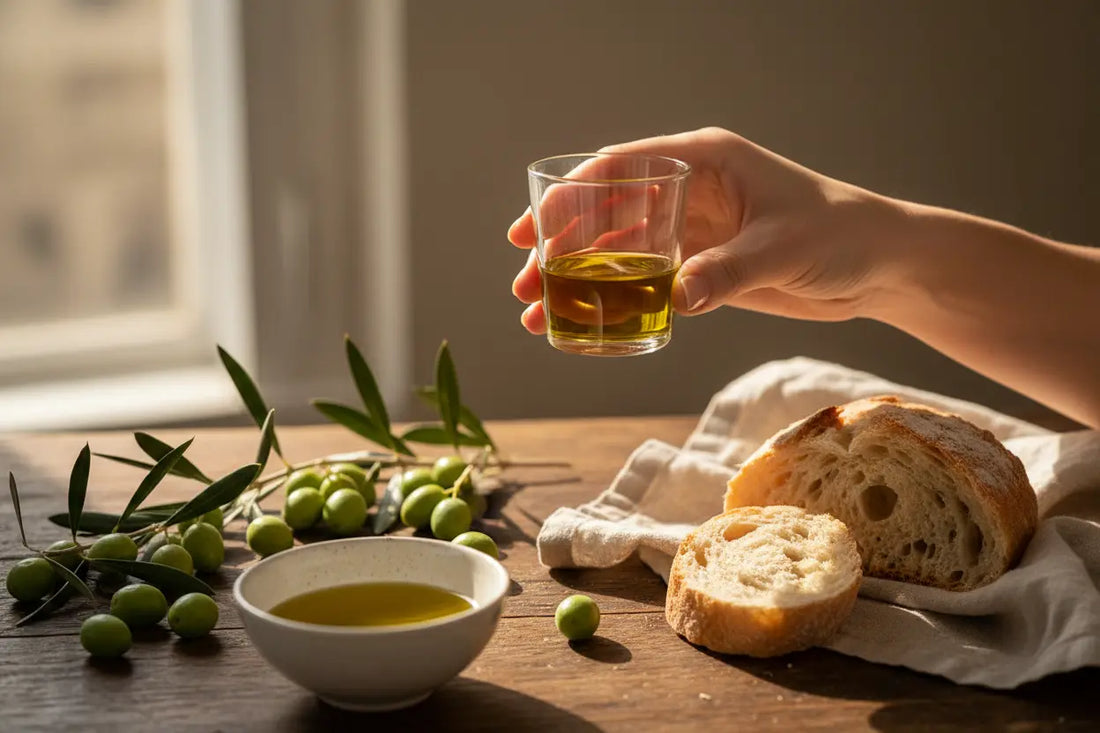
A first sip of extra virgin olive oil can reveal far more than most shoppers expect. A proper tasting shows freshness, balance, and whether an oil feels lively or flat. Color alone won’t tell that story, which is why professional tasters focus on aroma, texture, and finish instead. The good news is that anyone can learn the basics. With a simple setup and a repeatable method, tasting olive oil becomes a practical skill for choosing better bottles.
What Tasting Olive Oil Can Tell You
Olive oil tasting is a quick way to judge quality before a bottle ever reaches the table. Fresh, high-quality extra virgin olive oil usually shows clear fruitiness, a touch of bitterness, and a peppery edge called pungency. Those three positive attributes help reveal balance and freshness. Color does not determine flavor, so a pale oil can still be excellent and a green olive tone does not guarantee quality. Once that is clear, the rest of the process becomes easy to follow.
What You Need Before You Taste
A good tasting setup does not need fancy equipment, but a few small choices make the results much more reliable. The goal is to remove distractions so the oil’s natural flavors stand out clearly.
Choose the Right Glass or Cup
A small wine glass or tasting cup works well if a blue glass is unavailable. A narrow rim concentrates aromas, and opaque containers help reduce bias from olive color.
Set Up a Neutral Tasting Space
Use an odor-free room with no strong food, perfume, or cleaning smells. Bright but simple lighting and an uncluttered table help keep attention on the oil’s natural flavors instead of the surroundings.
Gather Palate Cleansers
Keep water and plain bread or apple slices nearby between samples. Small portions are enough to reset the palate so each oil tastes distinct and easier to compare.
How to Taste Olive Oil Like a Pro
The core method is simple: warm the oil, smell it, taste it with air, then notice the finish. Professional tasters repeat this same pattern because it makes subtle differences easier to detect from one sample to the next.
Warm and Swirl the Oil
Cover the glass with your hands to gently warm it, then swirl slowly. A little warmth helps aroma molecules open up, which makes the oil easier to evaluate without spilling any sample.
Sniff for First Impressions
Uncover the glass and take a brief inhale from the rim. Look for fresh, green, fruity, or herbal notes before trying to name every detail. First impressions often reveal the most about intensity and freshness.
Slurp to Aerate the Oil
Take a small sip and draw in air at the same time. Aeration spreads the oil across the palate and lifts retronasal aroma. Notice bitterness, texture, and aroma as separate impressions instead of trying to describe them all at once.
Swallow and Notice the Finish
Swallow a small amount and pay attention to the throat sensation. A peppery tickle can be a positive sign of freshness and polyphenols. Also notice how long the flavor lingers after swallowing, since a good finish often signals structure.
How to Identify Olive Oil Tasting Notes
Once the basic method feels comfortable, the next step is learning how to describe what is in the glass. Clear tasting notes make it much easier to compare oils and choose the style that fits your cooking.
Recognize Fruitiness, Bitterness, and Pungency
Fruitiness means the fresh olive character that quality oil should have. Bitterness is a normal tongue sensation and a positive attribute, not a flaw. Pungency is the peppery catch in the throat that often appears in fresher oils.
Use Familiar Flavor References
Simple comparisons work best: green almond, grass, tomato leaf, or artichoke. Those references help translate a professional taster’s language into something memorable and practical for beginners who want to taste olive oil like a pro.
Separate Flavor from Defects
Rancid, waxy, or stale notes usually point to poor quality or improper storage. Fresh oils feel lively and clean, even when they are bold. Bitterness alone does not mean the oil has gone bad.
How to Compare Different Extra Virgin Olive Oils
Comparison tasting is where preferences start to become clear. Instead of assuming all extra virgin olive oils taste alike, sample them in a way that keeps each oil’s character easy to recognize.
Test One Oil at a Time
Pour small samples so the flavors stay manageable. Taste each oil individually before comparing them side by side, and keep notes consistent across every sample so the results stay useful.
| Style | What It Feels Like | Best For |
|---|---|---|
| Delicate | Light fruitiness, soft finish | Finishing mild vegetables |
| Medium | Balanced bitterness and pungency | Daily cooking and salads |
| Robust | Strong green flavors, peppery finish | Grilling, bread dipping, hearty dishes |
Look at Intensity and Balance
Decide whether the oil tastes delicate, medium, or robust. Balance shows up in the relationship between fruitiness, bitterness, and pungency. That balance helps home cooks choose an oil that matches the dish instead of overpowering it.
Take Simple Tasting Notes
Write down aroma, texture, finish, and any standout descriptors. Short phrases are enough. Repeated tasting and note-taking sharpen confidence much faster than trying to write polished essays.
Common Olive Oil Tasting Mistakes to Avoid
Even a good oil can be misread if the tasting process is sloppy. A few small mistakes can hide the real character of the sample, especially when comparing premium bottles.
Do Not Judge by Color Alone
Olive oil color varies naturally and does not predict flavor. Great oils can look pale or deep green, so keep the focus on aroma and taste rather than appearance.
Avoid Cold or Contaminated Samples
Store oils away from heat, light, and air, and use fresh bottles for the clearest comparison. Old or contaminated oil can mask the true character of even a well-made extra virgin olive oil.
Don’t Rush the Finish
Pause long enough to notice the aftertaste before moving to the next sample. The finish often reveals quality, structure, and that peppery lift that lingers after swallowing.
How to Practice and Improve Your Palate
Like any sensory skill, olive oil tasting improves with repetition. The more often the palate meets different oils, the faster it learns to spot texture, balance, and defects.
Start with Daily or Weekly Tastes
Taste small amounts of different oils on a regular schedule. Short sessions work best because they stay focused and train memory without dulling the senses.
Compare Fresh Oils from Different Styles
Try oils from different harvest times, regions, or intensity levels. Contrast teaches what natural variation feels like and helps identify which profiles fit personal taste.
Pair Tasting with Food Later
After tasting oils alone, try them on bread, vegetables, or salads. Food changes perception and shows how each oil performs in real meals, from finishing dishes to simple marinades.
Quick Olive Oil Tasting FAQ
These quick answers clear up the most common questions people ask after their first few tastings. They also help separate normal sensory traits from actual defects.
Is Olive Oil Supposed to Taste Peppery?
Yes. A peppery throat sensation is common in fresh, high-quality oil and is usually a positive sign of pungency rather than a problem.
What If I Don’t Like Bitter Olive Oil?
Bitterness is natural, but intensity varies a lot. If that flavor feels too strong, look for more delicate oils and sample a few styles before deciding.
How Can I Taste Olive Oil at Home?
A quiet room, a small glass, and a few fresh samples are enough. Keep notes, taste slowly, and stay focused on aroma, flavor, and finish.
A Better Way to Taste and Choose Olive Oil
Learning to taste olive oil is less about memorizing jargon and more about noticing what feels fresh, balanced, and clean. Once the basic method becomes familiar, it is easier to choose a bottle for everyday cooking, finishing dishes, or pairing with gourmet condiments and salads. That same skill also helps shoppers spot premium, artisanal oils with better natural flavors and no preservatives. A few careful tastings can change how every bottle is judged from that point on.
FAQ: Guide to Olive Oil Tasting
Q: What is olive oil tasting and why does it matter? A: Olive oil tasting is the sensory evaluation of an oil's aroma, flavor, and finish — similar to wine tasting. It helps you distinguish between a mass-produced, flavorless oil and a premium, freshly pressed extra virgin olive oil with genuine complexity and health benefits.
Q: What are the key characteristics to look for when tasting olive oil? A: There are three primary attributes to evaluate — fruitiness (the fresh, olive-forward aroma and flavor), bitterness (a pleasant sharpness on the mid-palate from polyphenols), and pungency (a peppery, throat-catching finish that signals high antioxidant content). A great finishing oil will have all three in balance.
Q: What's the difference between a finishing oil and a cooking oil? A: A finishing oil is a premium extra virgin olive oil meant to be drizzled raw over finished dishes — salads, grilled fish, bruschetta, soups — to showcase its full flavor. A cooking oil is used for high-heat applications where delicate flavors would be destroyed. Never waste a great finishing oil in a hot pan.
Q: How should I taste olive oil properly? A: Pour a small amount into a glass, warm it in your hands for 30 seconds, then smell deeply before sipping. Slurp it slightly to aerate it across your palate, note the fruitiness up front, bitterness in the middle, and pungency at the finish. Cleanse your palate with sparkling water and plain bread between samples.
Q: What does "extra virgin" actually mean? A: Extra virgin is the highest grade of olive oil, meaning it was cold-pressed without heat or chemicals and has less than 0.8% acidity. It retains all the natural polyphenols, antioxidants, and flavor compounds that make premium olive oil both delicious and nutritious.
Q: How do I pair olive oil with food? A: Light, delicate oils pair well with mild fish, fresh mozzarella, and steamed vegetables. Medium-intensity oils complement salads, grilled chicken, and pasta. Bold, peppery oils stand up to red meats, aged cheeses, hearty soups, and robust balsamic vinegars — a classic Southwestern pairing with Tubac's finishing vinegars.
Q: How does olive oil pair with balsamic vinegar? A: A premium extra virgin olive oil and an aged balsamic vinegar are one of the great culinary pairings. The oil's richness and fruitiness balance the vinegar's acidity and sweetness. Whisk them together with a pinch of sea salt for an instant gourmet dipping sauce or vinaigrette.
Q: How should I store olive oil to preserve its flavor? A: Store in a cool, dark place away from heat and light — never next to the stove. Use within 6 months of opening. Avoid clear glass bottles exposed to sunlight, which accelerates oxidation and turns the oil rancid.
Q: How do I know if an olive oil has gone bad? A: Rancid olive oil smells waxy, crayon-like, or like old nuts — and tastes flat and greasy with no fruitiness or pepper finish. Fresh, high-quality oil should smell grassy, green, or fruity and have a clean, bright flavor.
Q: Where can I find premium finishing oils to pair with Tubac Gourmet Foods products? A: Tubac Gourmet Foods' artisan finishing vinegars — including aged balsamic, honey vinegars, and infused varieties — are designed to be paired with quality extra virgin olive oils for vinaigrettes, dipping sauces, and finishing drizzles. Shop the full collection at tubacgourmetfoods.com.