


For the home cook who refuses to compromise on flavor
What Is Traditional Aged Dark Balsamic?
True balsamic vinegar is one of the oldest and most revered condiments in the world, originating in Modena and Reggio Emilia, Italy. Traditional aged dark balsamic is made from freshly pressed grape must — the whole crushed grape including skins, seeds, and stems — typically from Trebbiano or Lambrusco grapes.
The Process
The must is slowly cooked over an open flame until it reduces by roughly half, concentrating the natural sugars. It's then transferred into a battery of progressively smaller wooden barrels — often made from oak, cherry, chestnut, mulberry, and juniper — each imparting its own character to the vinegar. Over the course of 12 to 25+ years, the balsamic slowly evaporates, concentrates, and absorbs the complexity of the wood.
The result is a thick, syrupy, deeply complex liquid with a perfect balance of sweet and tart — no additives, no thickeners, no shortcuts. Just time, wood, and grapes.
What Is Balsamic Glaze?
Balsamic glaze (sometimes called balsamic reduction) is a commercial product designed to mimic the look and texture of aged balsamic at a fraction of the cost and time.
The Process
Most commercial balsamic glazes start with cheap wine vinegar — not grape must — combined with grape juice concentrate, corn syrup or sugar, and thickening agents like modified starch or xanthan gum. The mixture is heated, reduced, and bottled. The entire process takes hours, not years.
Some glazes do use a base of lower-grade balsamic vinegar (IGP-certified), but even these are sweetened and thickened artificially to achieve that glossy, pourable consistency.
Why Traditional Aged Dark Balsamic Wins
Flavor depth you can't fake. Decades of barrel aging create layers of flavor — dried fruit, caramel, fig, dark cherry, a whisper of wood — that no glaze can replicate. Glaze is one-dimensional: sweet with a vinegar edge.
A living ingredient. Aged balsamic changes with every drop. The complexity evolves from the first barrel to the last. Glaze is manufactured to be consistent — which means consistently flat.
No fillers, no shortcuts. Traditional balsamic contains one ingredient: cooked grape must. Glaze labels often read like a chemistry experiment.
Concentration of natural sugars. The sweetness in aged balsamic comes entirely from the grape, intensified over years. Glaze sweetness comes from added sugars — a very different experience on the palate.
A little goes a long way. A few drops of quality aged balsamic elevate a dish. Glaze requires tablespoons to achieve a fraction of the impact.
How to Use Each
Traditional Aged Dark Balsamic
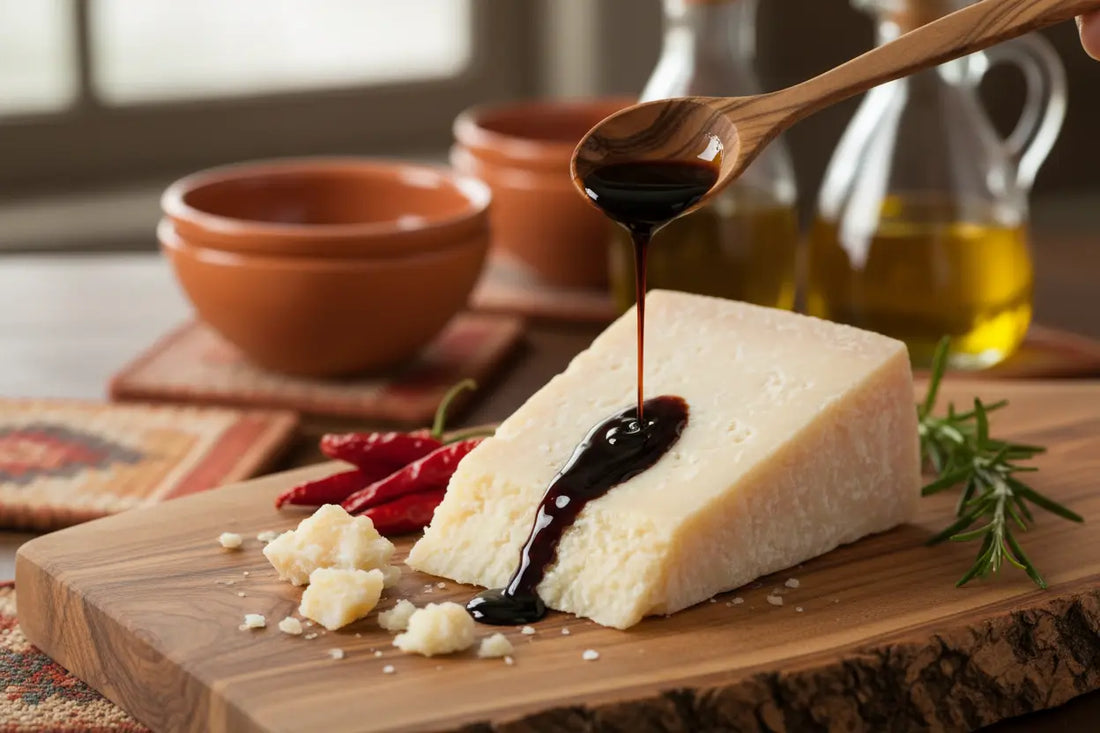
- Drizzled over aged Parmigiano-Reggiano — the classic pairing
- Finished over grilled meats — steak, duck breast, lamb chops
- Over fresh strawberries or vanilla gelato — a revelation
- On a cheese and charcuterie board — a few drops transform the entire spread
- Drizzled over roasted vegetables — butternut squash, beets, figs
- Finishing touch on bruschetta or crostini
- Paired with extra virgin olive oil for a premium bread dip
Balsamic Glaze
- Caprese salad drizzle — where presentation matters more than nuance
- Pizza finishing drizzle — works well with the bold flavors
- Grilled chicken or salmon glaze — the sweetness caramelizes nicely
- Sandwich and wrap drizzle — accessible everyday use
- Dipping sauce base — easy to portion and control
The Bottom Line
Balsamic glaze has its place in a busy kitchen — it's convenient, affordable, and consistent. But it was designed to approximate something it can never truly be.
Traditional aged dark balsamic is the result of patience, craft, and an unbroken Italian tradition. When you reach for it, you're not just adding flavor — you're adding history.
At Tubac Gourmet Foods, our dark balsamic vinegars are selected for their depth, balance, and authenticity. Whether you're finishing a dish or building a gift set, this is the ingredient that makes the difference.
Ready to taste the difference? Shop our Traditional Aged Dark Balsamic Vinegar →