


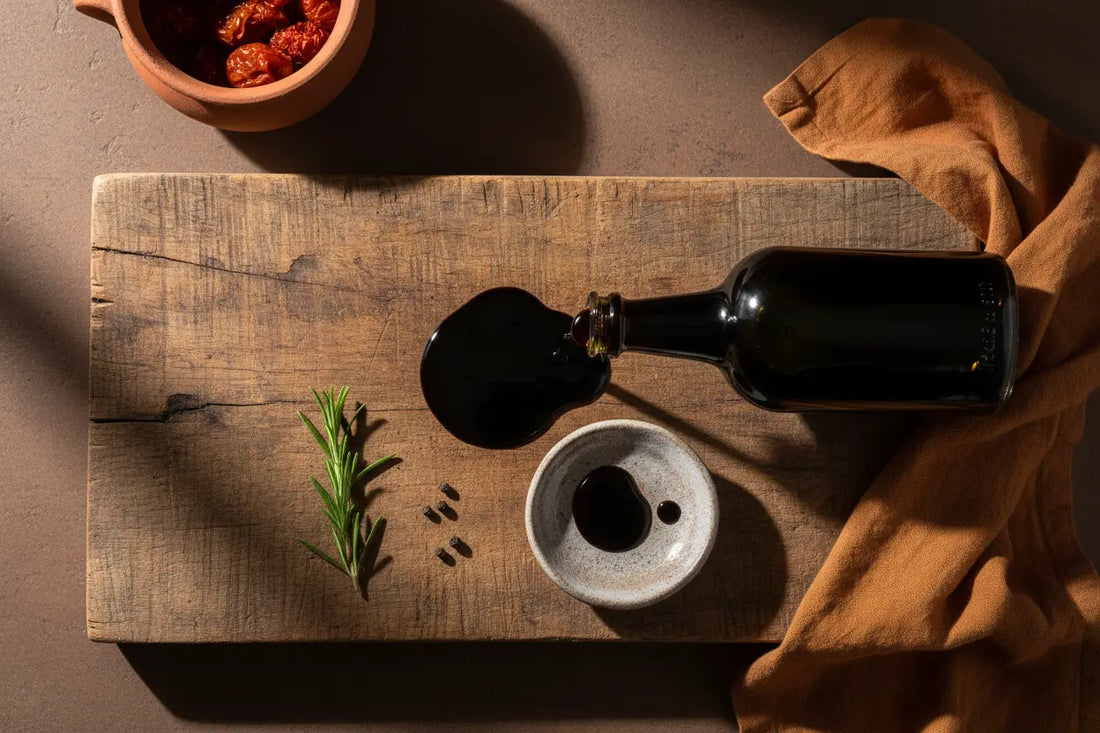
The pantry staple that only gets better with time.
The Secret Behind Aged Balsamic Vinegar's Longevity
You may have noticed something unusual on a bottle of true aged balsamic vinegar: no expiration date. That's not an oversight — it's a reflection of the vinegar's extraordinary chemistry.
Authentic aged balsamic vinegar, particularly Aceto Balsamico Tradizionale from Modena or Reggio Emilia, is one of the most shelf-stable condiments in the world. The reason comes down to three natural properties:
- High acidity — A naturally low pH creates an inhospitable environment for bacteria and mold.
- Low water activity — The slow reduction and aging process concentrates sugars and evaporates moisture, leaving little room for microbial growth.
- Antioxidant-rich compounds — Polyphenols developed during the barrel-aging process act as natural preservatives.
In short, the very process that makes aged balsamic vinegar so complex and delicious also makes it virtually indestructible.
How Long Does It Actually Last?
A properly stored aged balsamic vinegar doesn't just last — it continues to develop. Traditional balsamic aged 12, 18, or 25+ years in progressively smaller wood barrels (cherry, chestnut, oak, juniper, and mulberry) builds flavor that deepens over time.
Once opened, a quality aged balsamic will maintain its character essentially indefinitely. You may notice slight changes in consistency or intensity over many years, but these are signs of evolution, not spoilage.
The only enemy of aged balsamic vinegar is improper storage.
How to Store Aged Balsamic Vinegar the Right Way
Follow these simple guidelines to preserve every drop of its complexity:
1. Keep it away from heat and light.
Store your bottle in a cool, dark place — a pantry or cabinet away from the stove and direct sunlight. Heat and UV light can degrade the delicate flavor compounds developed over years of aging.
2. Always seal it tightly after use.
Exposure to air over time can cause gradual evaporation and oxidation. Replace the cap or stopper immediately after pouring.
3. Store it upright.
Unlike wine, balsamic vinegar does not benefit from being on its side. Keeping it upright prevents any potential interaction between the liquid and a cork or rubber stopper.
4. No refrigeration necessary.
Aged balsamic vinegar does not need to be refrigerated and actually does better at stable room temperature. A refrigerator's cool, damp environment offers no benefit and can cause unwanted thickening.
5. Use a clean, dry utensil or pour directly.
Introducing moisture or food particles into the bottle can compromise the purity of the vinegar over time. Pour cleanly or use a dry spoon.
A Note on "Best By" Dates on Commercial Varieties
You may find a "best by" date on mass-produced balsamic vinegars or balsamic-style condiments. These are typically blends that include wine vinegar, caramel, or thickeners — and don't share the same natural preservation properties as true aged balsamic. When in doubt, check the ingredient list: the fewer the ingredients, the more shelf-stable and authentic the product.
The Bottom Line
Aged balsamic vinegar is one of the rare pantry staples where time is always on your side. Store it simply, treat it with care, and it will reward you for years — if not decades — to come.
Looking to add a bottle to your pantry? Browse our collection of premium aged balsamic vinegars — each one crafted with the patience and tradition that only true aging can produce.